The clinician and author behind BKL
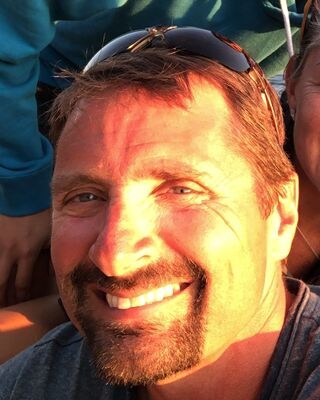
Brian C. Kennedy
MA, LMFT
More than thirty years of clinical practice, training, and writing inform Brian Kennedy Learning’s approach to emotional life, relationships, and experiential learning.
01 / About
A Little About Me
Brian Kennedy, LMFT — Founder, Brian Kennedy Learning
For more than thirty years, I've worked as a marriage and family therapist, helping individuals and couples understand themselves, navigate difficult relationships, and find more room for connection and choice. Brian Kennedy Learning brings that clinical experience into an educational setting, where you can explore at your own pace, independently or alongside therapy.
My interest in this work is personal. I grew up amid love and instability, learning to notice other people's feelings and take responsibility for making things better. Later, I discovered that sensitivity could help me connect and also lead me to lose my own voice. That experience continues to shape my compassion for the patterns we develop—and my interest in what they cost us now.
I've had the privilege of learning from mentors including Richard Schwartz, Diana Fosha, David Calof, John Welwood, and Doug Anderson. Attachment theory, experiential psychotherapy, depth-oriented thinking, and an understanding of relationships have each shaped my work. No single theory captures a whole person, and I want these ideas to deepen curiosity rather than replace it with a label.
Across tens of thousands of clinical hours, people have taught me that insight and experience need each other. We may understand why we withdraw, criticize ourselves, or take over without finding another response available when it matters. A manageable experience of speaking honestly, receiving support, or responding differently can offer something an explanation alone cannot. What happens afterward helps us reconsider the next step.
The pathways here connect that kind of inquiry with everyday practice. You can begin with an ordinary moment, explore a possible explanation, correct what doesn't fit, and choose a small experiment if useful. Your history belongs beside your present circumstances, genuine responsibilities, available support, and other people's actual behavior. You can pause, skip an exercise, or leave a question open.
Nature, friendship, humor, and ordinary pleasures remain important touchstones in my life. I am interested in more than understanding suffering: I want this work to leave room for belonging, creativity, joy, and a fuller participation in living. I continue to practice these capacities myself, with plenty still to learn.
My hope is that BKL offers you a thoughtful place to begin, without asking you to reject the person you have been. Explore the concern that matters to you now; you don't have to know where the whole journey will lead.
More of my story
Doug Anderson taught me that bringing hope into suffering requires a willingness to accompany someone into the darkness, rather than standing outside and calling them toward the light. That understanding has stayed with me in my clinical work and my own life. Companionship does not make the journey painless or give another person authority over our experience. It can help us find our footing.
Recently, I returned to northeastern Oregon and Idaho, where generations of my family lived. I traveled through Hells Canyon, beneath the Seven Devils, and into the Wallowa Valley. I carried memories of people who had loved, struggled, and sometimes hurt one another there. I was also returning some of my mother's ashes to the mountains near where her life began.
Those landscapes held something I recognized. Hells Canyon contains extraordinary beauty within its depths. Mt. Misery opens onto magnificent views. Places named Eden and Paradise have known hardship. Darkness and light belong to the same earth. In us, too, tenderness can coexist with anger, generosity with resentment, and love with difficulty loving well. I want to make room for that whole human picture.
My life has taught me patience with things that cannot be rushed: climbing a mountain, learning a skill, repairing a relationship, or recognizing an old response as it happens. Some journeys require sustained attention and companionship. They also require a return to living. Humor, play, beauty, friendship, and the quiet satisfaction of ordinary days matter. We are here for more than an understanding of our suffering.
02 / Therapeutic approach
Understanding the whole person.
Brian’s work is attachment-based, experiential, relational, and informed by affective neuroscience. Rather than treating symptoms as isolated problems, he listens for the history, relationships, bodily responses, and protective strategies that make those symptoms understandable.
Therapy begins by establishing trust: the experience of being listened to carefully, understood accurately, and met without judgment. From there, the work becomes a collaboration—slowing experience down, contacting the emotions beneath familiar defenses, and allowing new possibilities to emerge.
His training includes family systems therapy, Internal Family Systems, Bowen family-of-origin work, and PACT couples therapy. His present work also draws from AEDP, attachment theory, interpersonal neurobiology, and body-aware experiential psychotherapy.
03 / Education & experience
Training grounded in relationship.
Education and credentials
- Master of Arts in Marriage and Family Therapy — Pacific Lutheran University
- Bachelor of Science in Developmental Psychology — Eastern Washington University
- Bachelor of Arts in Applied Psychology — Eastern Washington University
- Advanced training from CIIS CPTR — Certificate in Psychedelic-Assisted Therapy (PAT)
- Licensed Marriage and Family Therapist, Washington State — LF00000884
Selected experience
- More than 30 years in the mental-health profession and private practice
- Former lead trainer and Northwest program administrator for Internal Family Systems training
- Advanced clinical training in PACT couples therapy
- Former chair, Washington State Department of Health Mental Health Advisory Commission
- Former board member and legislative committee chair, Washington Association for Marriage and Family Therapy
- Clinical consultation, professional training, conference presentations, and published clinical writing
04 / Areas of focus